2. In October 2007, a veteran of the Timorese resistance named Rio da Montanha, came to the city and announced the return of Vicente Reis, one of the fathers of the nation and of the short-lived First Republic in 1975. Rio da Montanha’s announcement was heard by hundreds of people who gathered from throughout the country by the dry stream at Comoro and, setting up tents and killing buffalos, awaited Vicente Reis in an open field. Vicente Reis, the second figure in the resistance along with President Nicolau Lobato, was ambushed by Indonesian troops in the south of the country in January 1979. Vicente Reis Bie Ki Sa’he (the name he took from his grandfather) died four weeks after the ambush from loss of blood and lack of medical care. He is buried in a mountain in Manufahi, in the south of the country, known as the House of Bats. “The man doesn’t live here. Only his name lives here,” explained Rio da Montanha when I asked him how a dead man could come back. Vicente Reis’s family considered the foretold resurrection “a hoax and a political conspiracy” and promised, if necessary, to display the martyr’s skeletal remains. “The Indonesian soldiers who found the body cut off one leg, to prove to the commander of the Indonesian VI Battalion that they had killed Vicente Reis himself,” one of Vicente’s brothers, Marito Reis, a former political prisoner in Cipinang, Jakarta, and a member of the present government, told me. “The commander, who was waiting in the helicopter, told them the leg wasn’t good for anything. He needed the head! But he left the House of Bats with nothing. Vicente’s leg remained there.”
In 2002, after East Timor’s independence, Vicente Reis’s family organized a visit to the grave in the House of Bats. “We found the grave at the foot of bamboo trees, started digging, and we found the bones” – with the left leg cut off. “The skeleton was removed and identified, missing one leg,” Marito Reis told me. “After the discovery of the grave, we cleaned the bones and put in a new lipa [a kind of shroud], with plastic, and left everything in its original spot.” The announcement that Vicente Reis was alive was accompanied by images from the 2007 presidential campaign of Francisco Xavier do Amaral, founder of the Associação Social Democrata Timorense and first president of the Timorese republic in 1975 (for nine days until the invasion). The images showed the supposed Vicente Reis, but a man named Manoel Escorial appeared days later on national television to reclaim his identity and denounce the “fraud.”
The bodies are buried, when there was the privilege of their being available for this. It was on bodies – and above all, on the female body – that violence was practiced, and it is because of this that in them violence rots into dust, or stone (like the punishment for the sacrilegious who break the laws that govern the universe in Timorese tradition). In Timor, the dead, or the part of them that survives, are the geography of their own relationships, in the literal sense of the word: the lines that establish contact between two points, two people, two lives. That line defines a concept of life as a symmetry, with two reciprocal locales. It is not the elimination of one of them that will make – just the opposite – the other lose the sense of where it is, or the place to which it belongs, and of where it is going.Timor’s tiny area houses a rigorous and indestructible notion of the place that every man occupies, in a twofold line: with the gods (a line with the verticality of mountains) and with others (a line with the density of blood). It is an intimate place, unique in time and space, which tells a story, bears dignity, demands honor. In Bauró, a few kilometers from Lospalos, in the country’s eastern plateau, a carpenter, Egídio Gandara, told me how he managed to find his nephew Tomás again, who had been taken to Indonesia at the age of three, after the invading troops had massacred the boy’s parents, both officers in Fretilin.
Tomás Gandara, a Timorese of Fataluco ethnicity, from a Catholic family and raised to speak Portuguese, grew up in Jakarta, in a Muslim Javanese family, who gave the child the name Tommy Abdurrahman. Abdurrahman grew up ignorant that within him was another man: Tomás. Fifteen years later, through a series of accidents, his uncle succeeded in locating him in Jakarta and visited him. In other words, Abdurrahman was visited by his lost truth. He returned to Timor and Bauró, still under occupation, in 1994. He learned the national language and the language of the tribe. Two years later, in 1996, now twenty years of age, he went back to Jakarta as a young member of the Timorese resistance, to leap the wall of a Western embassy and request asylum in Portugal. He returned definitively to East Timor, already ill, in 2000. He died two weeks later and is buried beside the carpentry shop of his uncle, who offered his nephew – after his death – a blue car.
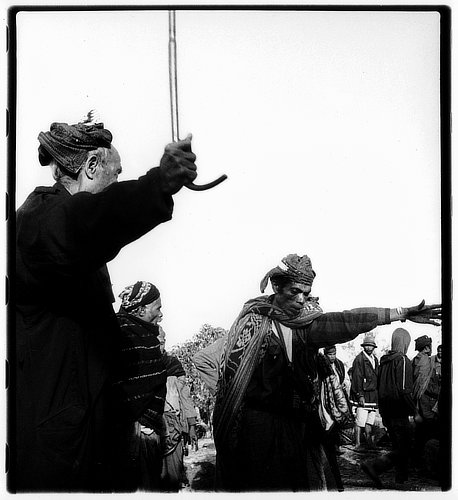
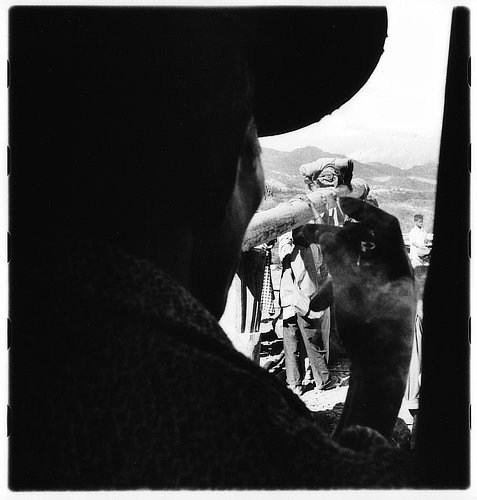
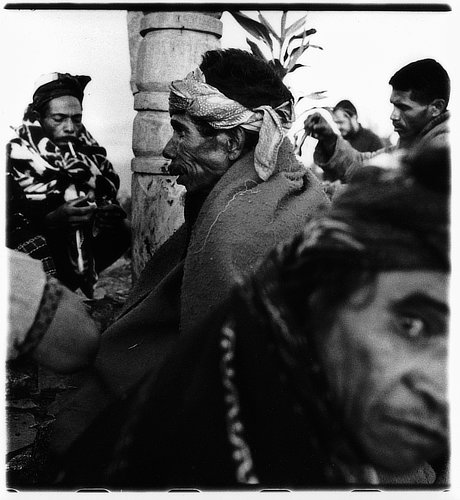
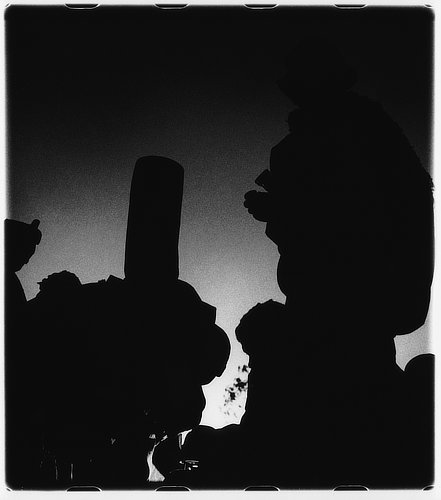
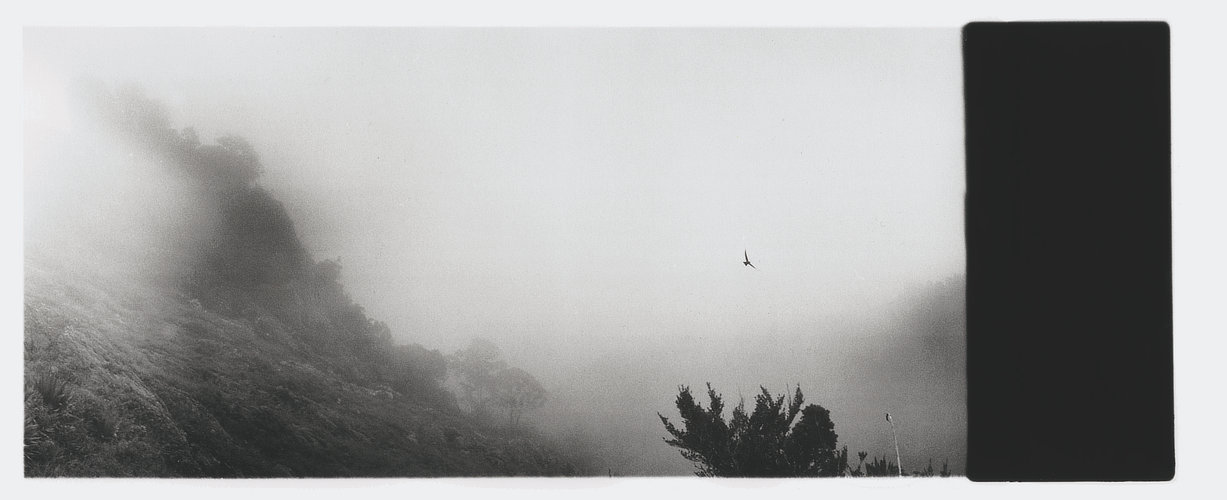
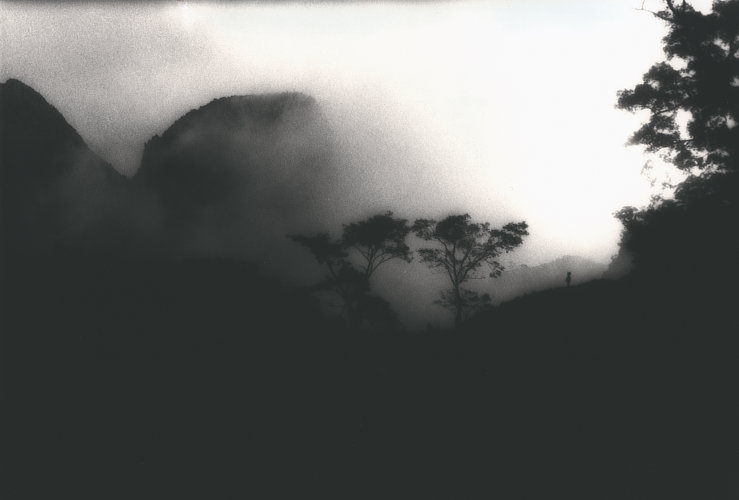
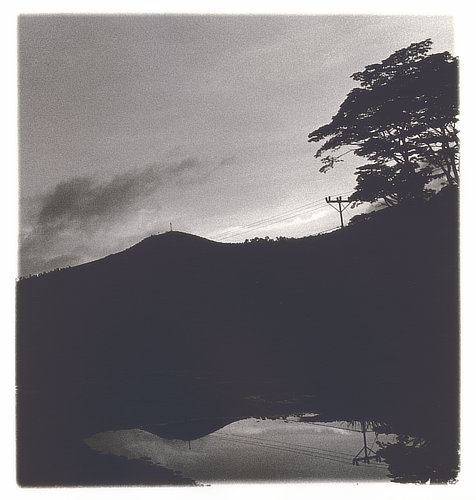
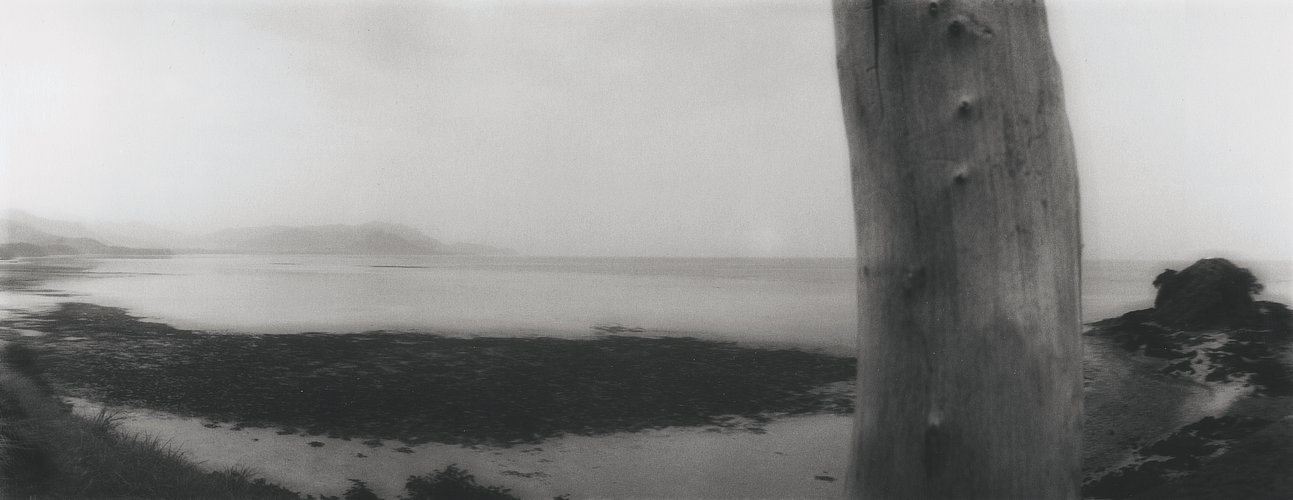
4. The Tata-Mai-Lau (2,963 meters) is the highest of Timor’s peaks and, like others equally profound, is sacred, or religious, in the sense attributed to this word by Rudolph Otto in his influential book Das Heilige (from 1917, cited by the Portuguese poet and agronomist Rui Cinatti in the notes to his Paisagens Timorenses com Vultos). “It denotes the confrontation with what is called ‘Das Numinose,’ implying simultaneously ‘Mysterium tremendum’ and ‘Das Fascinans,’” terrifying yet alluring. Tata-Mai-Lau means, in Cinatti’s translation, “Grandfather’s Peak.” The large mountain is there to the side, three kilometers above sea level, well into the sky and the winds, evoking silence and inspiring terror – like everything, Otto would say, outside or beyond everyday experience. In Catrai Lete, at the foot of Tata-Mai-Lau, an elder of elders, liurai among the liurais (monarchs, chieftains) squatting on his heels, wrapped in cloths as if wearing a turban from head to foot, lifts his ragged, fragile voice before the tribe. It is not to the tribe that he speaks. It is through the body of those who surround him, and through the darkness that envelops them, that the elder communicates with those who, present in some other place – there – have centuries ago ceased to have bodies, listening (as tonight), in the memory of their many descendants, for the signs that rescue them from oblivion.The ceremony of replacement of the feminine totem and the founding of the village’s new sacred house takes place, the lulik. The families, the village, the suco, the clan have come from different regions of Timor to be there, in the heights of Catrai Lete, at the feet of a symbolic mother: the mother, comprising in herself man and woman, to which the diverse group born in the villages traces its existence. There is a totem pole, a wooden pillar several meters tall, sacred in character. It points heavenward an invocation and a petition for forgiveness. On the ground it marks a possible center of the universe, and therefore of the life of each individual, a kind of hermaphroditic womb, where the members of the clan can read, on a coinciding plane, in their geography and their cosmology, the place that is theirs. “May all love protect the coming generation through this symbol,” the elder continues. The totem pole, the wooden mother, the hairy trunk, the tree with whitened skin from many monsoons: there stands an axis, in front of man frightened before his fate, guaranteeing that darkness will not fall upon the clouds, entombing the gods. The hours go by with a precise whirl of words, protocols, gestures, and sacrifices, alternating between convulsion and trance, wine and blood, tobacco and whitewash (they can mask themselves together), applause and mourning, knife and oil, prophecy and legend. It is a dialogue between worlds.
“We are the children of the Sun! We are the children of the stars! We are the children of the Moon!” proclaims the elder in the Mambae language. “You have shown us that we exist. We are independent!” In the Tetum language, ulu horis designates prisoners of war and the place where they are held. The expression also has a pejorative connotation: people without a past, without origin. In Catrai Lete, the “song” of lineage and the totem pole are witness that, for tribes on the island, it is more serious not to know where one comes from than not to know who one is.
The Timorese, “children of the sun and the moon,” have ancestral “songs” that define a territory, mythical to those who hear them, palpable for those born from them, a bit like the map-songs by which Australian aborigines invent their world, by saying it. In a country that has suffered genocide, memory is infinitely superior to loss. In Timor, many bodies fell (a third of the living…), but almost all the names go on, as firm as the totem poles that, atop peaks, signal the mythic affiliation of every man. I try to visualize the scope of that which, in Timor, exists only to the exact extent that it is spoken, because to speak is to convoke. And I see appear a sizeable army, even if its strength is merely a faith, perhaps merely a lie. The animism of the Timorese “represents only the expression of a state of the spirit,” Cinatti wrote in 1987, “which does not distinguish between the procedure to be employed with people and the procedure to be followed with ‘things.’ All the outside world is treated by the Timorese according to the model learned in their relations with society, transferring to things life, acts, and emotions familiar to the sphere of human relationships” (“Arquitetura Timorense”).
In the final luncheon in Darwin before returning to Dili, the Timorese president had beside him the Norwegian bishop Gunnar Stalsett, who reminded him that “vulnerability is the characteristic of Christ.” “It is by dying that we are born to eternal life,” the Lutheran bishop read from a book of prayers, marked on a page of St. Francis of Assisi. The bookmark of the Franciscan prayer was a representation of the Orthodox monastery of Hilander, on Mount Athos, Greece, called “the Redeemer.” “In a nightmare, in a dream, I saw two or three people whose faces I didn’t recognize, trying to smother me to death,” the president told me about the moment between life and death, between the anesthesia and the operation.
6. The lulik, which is divine or at least sacred, is the ancestral place in Timorese society that merges with inward power and the human condition. Reality, including politics and its codes, does not exist outside the lulik. The Timorese inhabit a magical realism that for them is as palpable and evident as it is invisible or fantastic for us. The only honest convocation of this reality is through the lexicon and the voices that can put them in contact with faith, fear, trauma, perception, and rumor. With all, in sum, that we usually call fiction. And only in this amorphous zone can we experience that which is the sole valid function of the best fiction: transcendence, in itself an intervention into our human limitations….the tallest Grandfather thrusts the first dawn into the sky. I see light orienting time. Profound pinnacles: mystery, fear, and fascination. Sacred mountain. Righteous mountain.
The ancestors descend the slope. They end in me. The children of the stars meet the children of the sea. They hang bodies on a headless trunk. I listen to the magical words: the cross bowed to sinners; the totem pole filled with names. Enclosed here: faces in shadow; pain in boxes; wood in wood. We are our shadows. Tombs on high. The tombs of giants. Inside them, we relearn the invocations to the gods from where we come: the stone, the tree and the crocodile, the green snake that thunder scratches into the smooth face of the mountain. From the wound runs a river carrying all the silver of the moon. Half the island was left over; of our half we were left with the island. The blood of the buffalo, our sacrifice, will fertilize the rice, the corn, and the Job’s-tears grass. The elders withdraw to the sacred house. They intercept the future over the ancestral rocks. History is not who was once here, it is that which we have passed through until now. The house is the moment. The generations-song awakens rotting dreams, startles the cruel dog, the bitter gaze. And the sacrilegious will be turned to stone.
Pedro Rosa Mendes
East Timor